Research
Remote recovery is a valid and effective option for patients.
I explored existing studies to examine how effective remote physiotherapy performed, compared to face-to-face appointments. One such study is from the Australian Physiotherapy Association:
“Remotely delivered physiotherapy with support via phone, text and an app is as good as face-to-face physiotherapy for the management of musculoskeletal conditions.”
User interviews
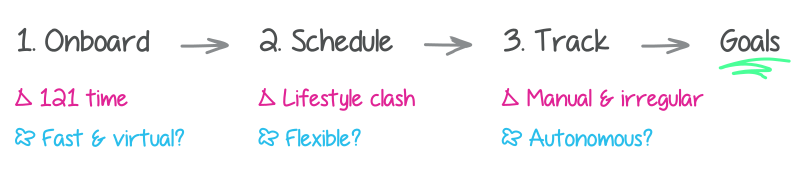
Regular attendance causes an inconsistent and sometimes stressful recovery experience.
In addition to the client sharing their patients' previous feedback on the service's ease-of-use, I invited 8 patients into the research phase to gain further insight into their pain points.
Research questions
- How often do you need to attend the centre?
- What challenges do you face to attend your appointments?
- Do you feel your recovery is on track with your current schedule?
- Does your treatment clash with areas of your lifestyle?
- If you could do recovery sessions at home, would that alleviate any issues?
Key insights
Theme 1: Accessibility - It can be a long drive, particularly for those in rural outskirts.
Theme 2: Availability - Appointment slots are limited due to the face-to-face time required.
Theme 3: Scheduling - Consistently attending around work, gym or family plans for a 30-60m appointment is a challenge.
Approach
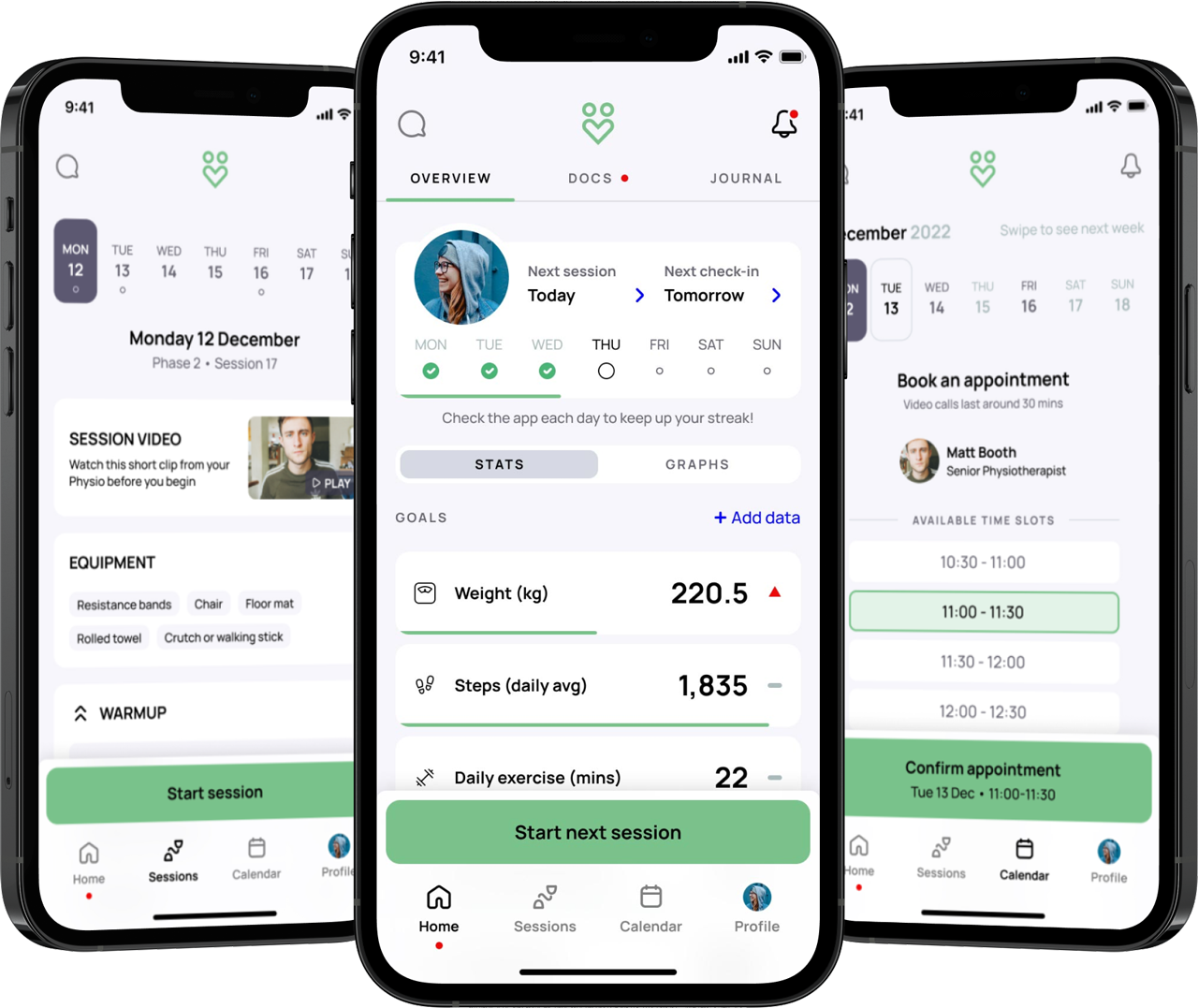
Introduce an app that promotes regular engagement, schedules recovery and provides virtual 1-2-1 support with the physiotherapist.
Following the research insights, a sensible approach was to package the service into an app to offer the same support but with more flexibility around patients' lifestyles:
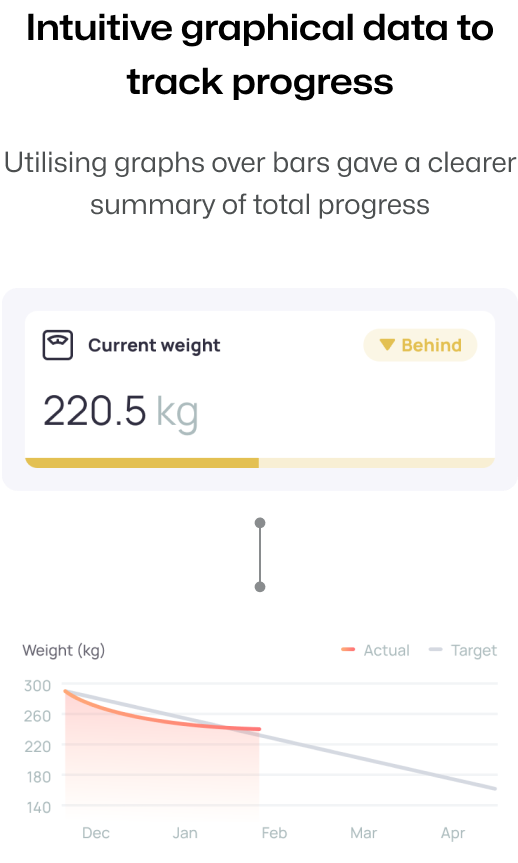
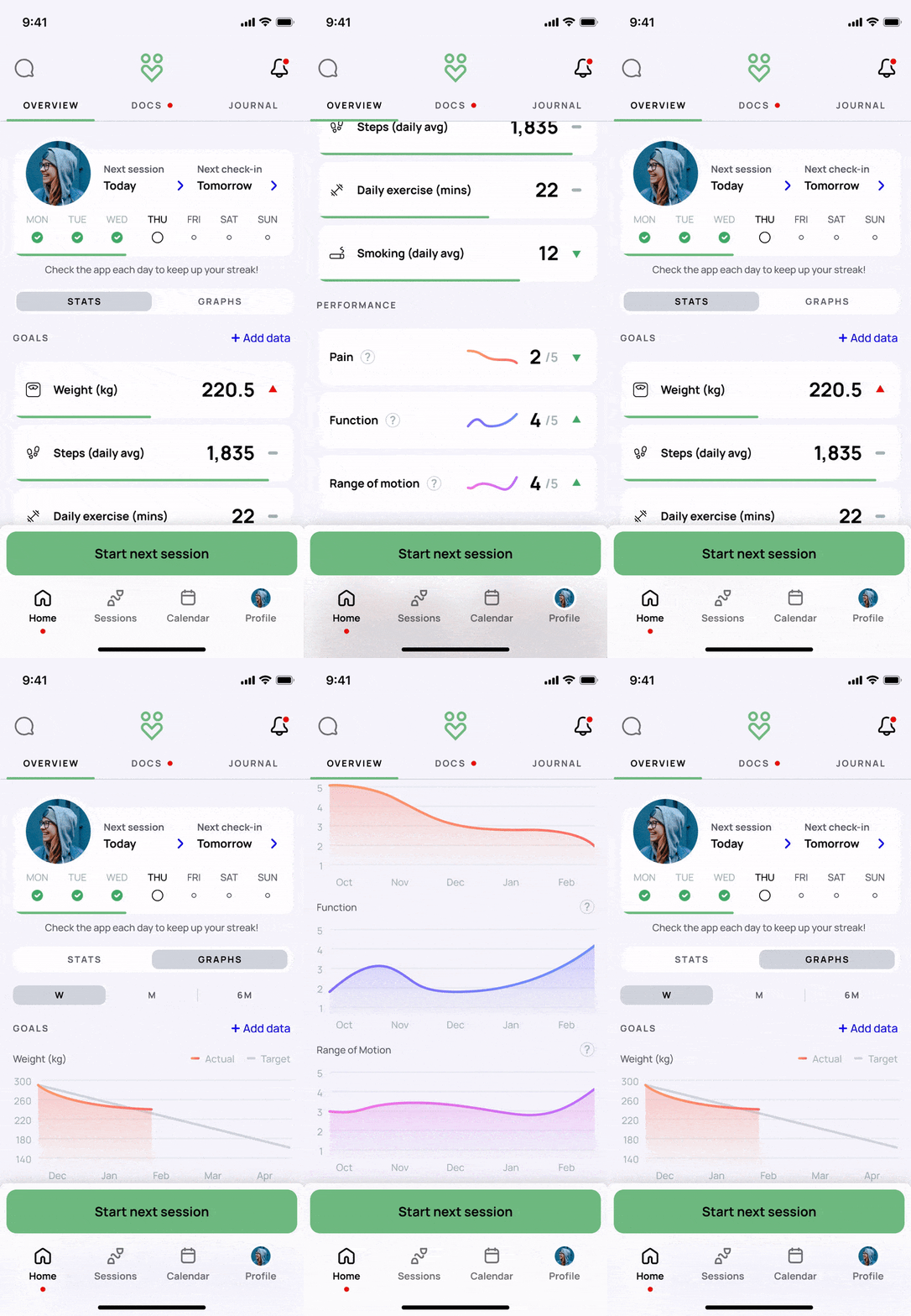
- Automatic metric-tracking that would usually be manually assessed
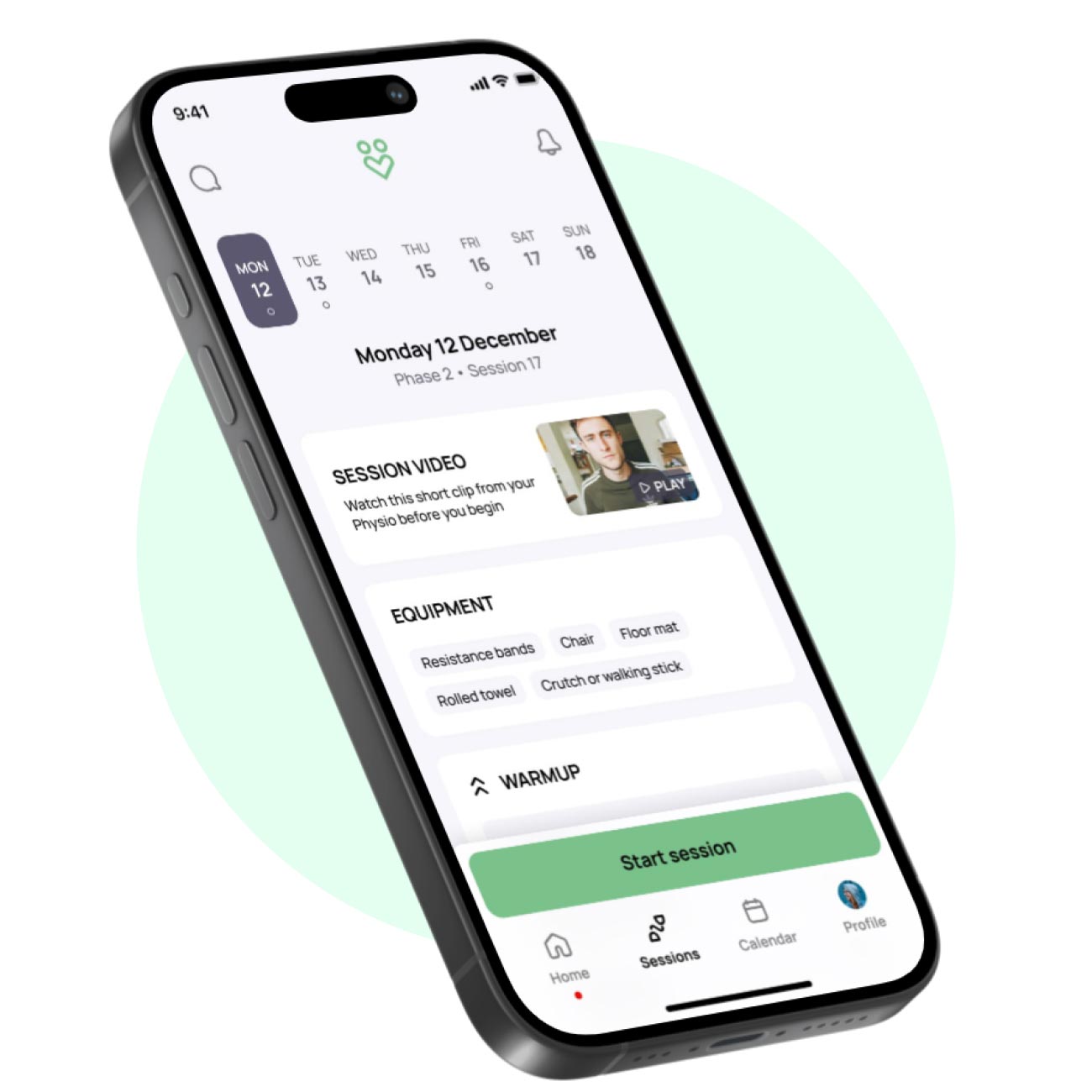
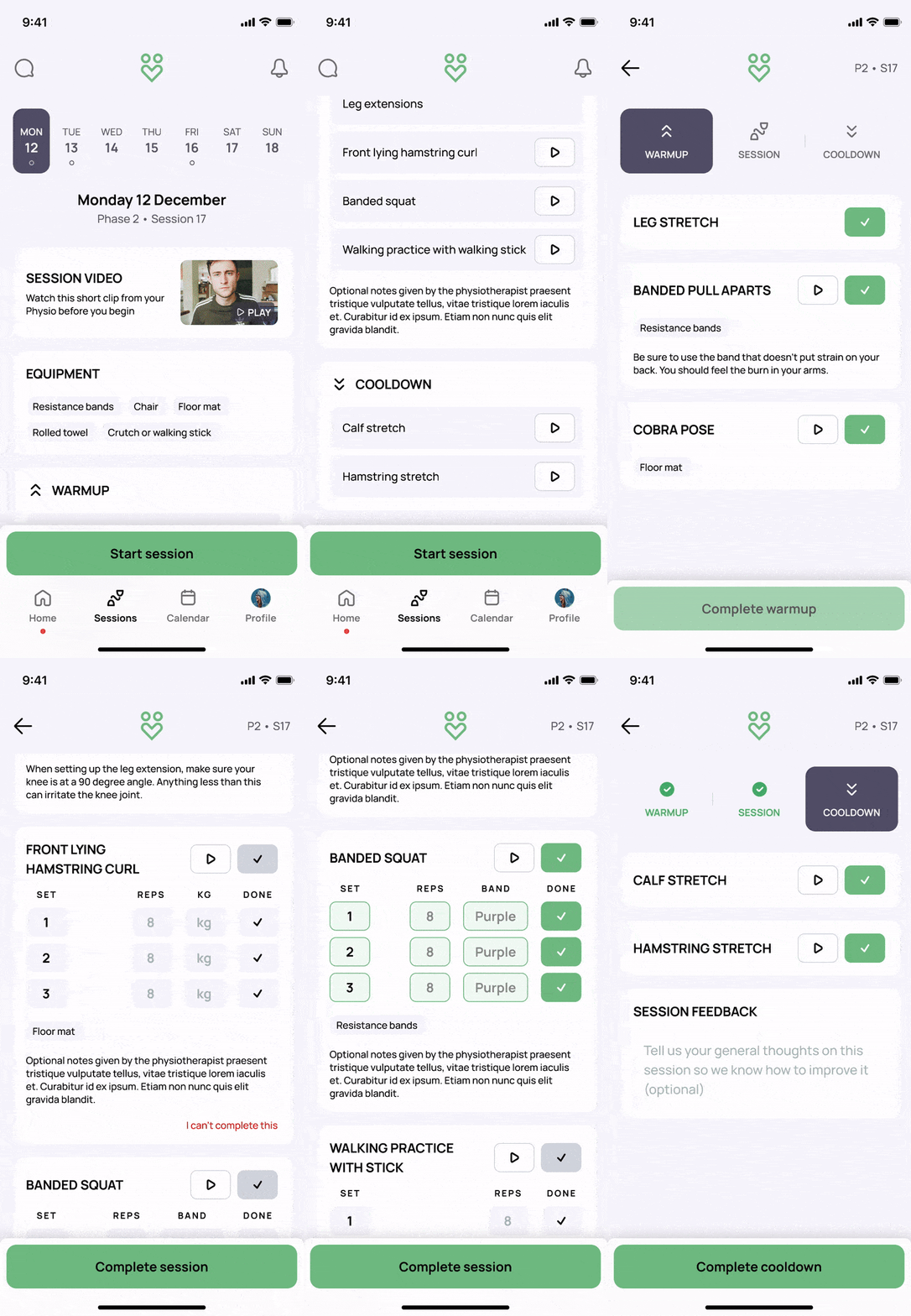
- Scheduled exercise sessions with some tolerance on their completion
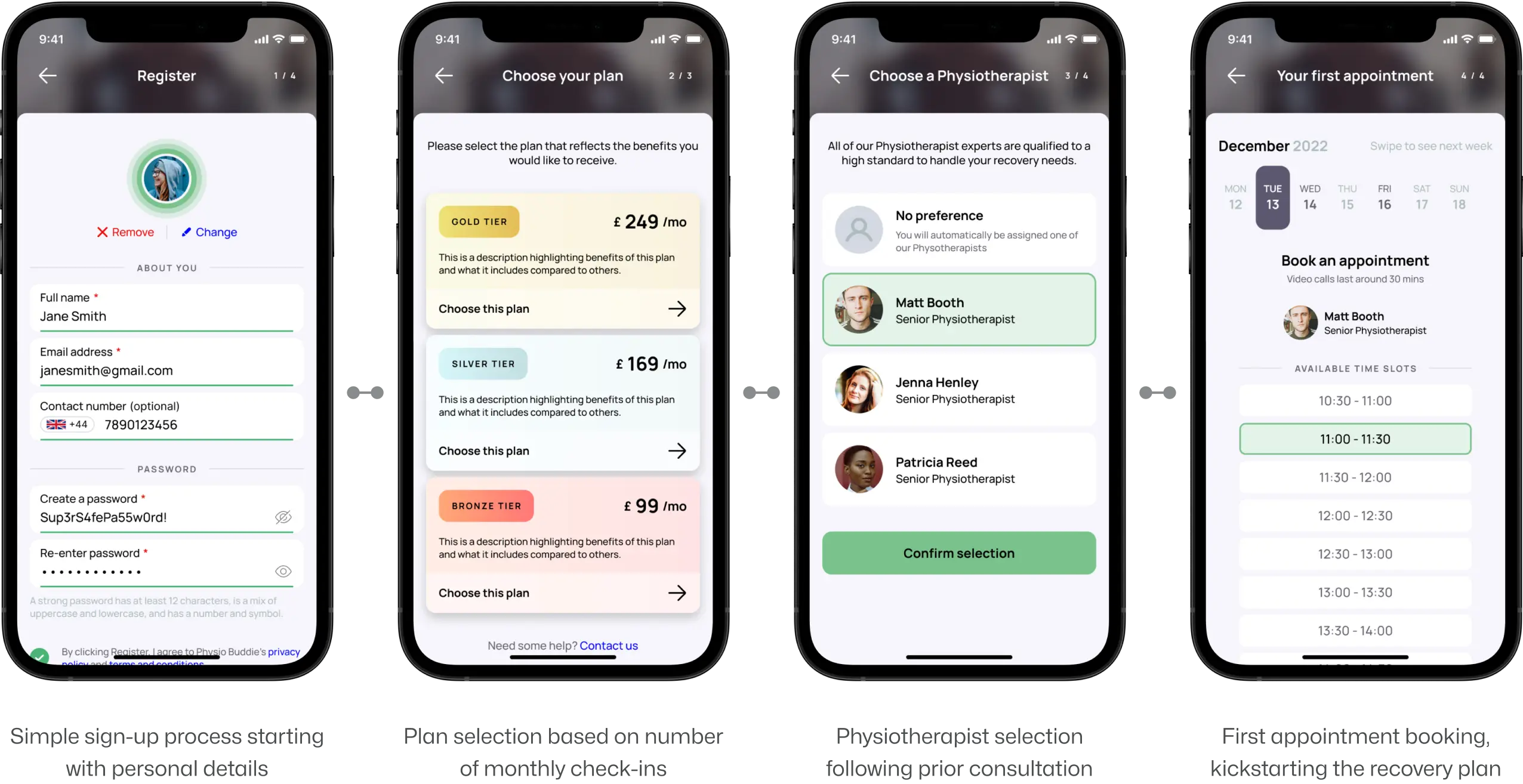
- Regular 1-2-1 check-ins over video calls
- A database of documentation and journal entries